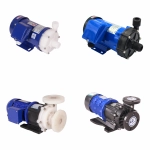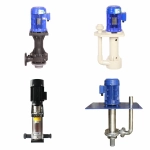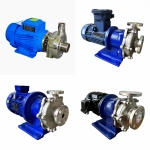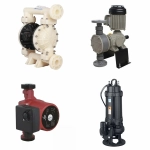
Acetic acid pump according to its structure, working principle and application characteristics can be divided into a variety of categories, mainly including the following:
Centrifugal pump:
A centrifugal pump is a common type of acetic acid pump that draws the liquid from the inlet of the pump by centrifugal force and then pushes the liquid through a rotating impeller to the outlet of the pump. It is suitable for acetic acid conveying of medium and small flow and medium head.
Diaphragm pump:
Diaphragm pump through the movement of the diaphragm to achieve liquid suction and discharge. This kind of pump is characterized by simple structure and good sealing performance, and is suitable for acetic acid conveying with high demand for pressure and flow.
Screw pump:
The screw pump uses the rotating movement of the screw to suck the liquid from the inlet end and push it to the outlet end. The pump is characterized by small pressure fluctuation and uniform flow when transporting liquid, and is suitable for acetic acid conveying of viscous liquid.
Submersible pump:
A submersible pump is a type of pump installed in a liquid that is suitable for situations where acetic acid needs to be extracted or transported from deep Wells or deep water.
Magnetic pump:
Magnetic pump through the magnetic drive impeller operation, no mechanical seal, can effectively avoid liquid leakage. Suitable for acetic acid conveying with strict leakage requirements.
Plunger pump:
The plunger pump realizes the suction and discharge of liquid through the reciprocating movement of the plunger in the pump body, which is suitable for the acetic acid delivery requiring high precision and high pressure.
Peristaltic pump
Peristaltic pumps achieve liquid push through the compression of peristaltic tubes or hose, and are suitable for acetic acid delivery where soft materials are required and the requirements for the pumped liquid are unchanged.
Vortex pump:
The vortex pump pushes the liquid out through the movement of the turbine and is suitable for acetic acid delivery where the liquid needs to be mixed and pushed.
Each type of acetic acid pump has its specific advantages and application scenarios, and the selection of the appropriate pump type needs to take into account the chemical properties of acetic acid, transportation requirements, flow rate and pressure.