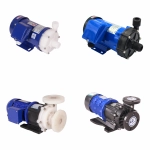
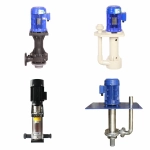
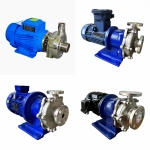
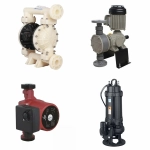
Common Fault Causes and Solutions of Chemical Self-priming Pumps
What are the common problems in the daily use of chemical self-priming pumps? Let's take a look today!
Faults, Causes and Solutions of Chemical Self-priming Magnetic Pump
1. The Chemical self-priming pump does not absorb water, and the pressure gauge beats violently.
Reason: insufficient water for perfusion, there is air in the Chemical self-priming pump, and the inlet pipeline and meter tube leak.
Solution: Fill enough water to divert water, check the pipeline, and eliminate air leakage.
2. The vacuum gauge indicates a high vacuum, and the Chemical self-priming pump still does not absorb water.
Reason: The bottom valve is not opened or seriously blocked, the suction pipe has a large resistance, and the suction height is too high.
Solution: Check the flexibility of the bottom valve, remove the blockage, try to make the suction pipeline as simple as possible, and reduce the suction height.
3. The outlet pressure gauge indicates that there is pressure, and the Chemical self-priming pump produces little or no water.
Reason: The resistance of the outlet pipe is large, the steering is wrong, the impeller is blocked, and the rotation speed is not enough.
Solution: reduce the pipe resistance, check the motor rotation, remove the impeller blockage, and increase the speed.
4. The flow rate is lower than the design flow rate.
Reason: The impeller is blocked, the gap of the seal ring is too worn, and the speed is not enough.
Solution: Remove the blockage, replace the sealing ring, and increase the speed to the specified value on the nameplate. 5. The Chemical self-priming pump consumes too much power.
Reason: The packing is pressed too tightly, the packing chamber is heated, the impeller is worn, and the Chemical self-priming pump flow is too large, exceeding the rated value.
Solution: loosen the packing gland, replace the impeller, close the gate valve, and reduce the flow.
6. The sound in the Chemical self-priming pump is abnormal, and the Chemical self-priming pump does not produce water.
Reason: The resistance of the inlet pipeline is too large, the water absorption height is too large, air enters the water suction pipe, and the temperature of the conveyed liquid is too high.
Solution: Check whether the inlet pipeline is blocked, clean the bottom valve, lower the liquid temperature or lower the water absorption height.
7. Chemical self-priming pump set vibration
Reason: The Chemical self-priming pump shaft and the motor shaft are not concentric, the impeller is unbalanced, and the bearing clearance is too large.
Solution: Adjust the self-priming magnetic Chemical self-priming pump and the motor to align the axes, the impeller passes the balance test, the unbalanced weight is required to be about 3 grams, and the bearing is replaced.
8. Bearing the heat
Reason: The bearing lacks oil or the oil viscosity is too large, which affects the lubrication, the bearing wear gap is too large, and the Chemical self-priming pump and the motor are not concentric.
Solution: refuel, replace high-quality or low-viscosity lubricating oil, replace bearings, adjust the Chemical self-priming pump and motor to ensure concentricity.
9. Loud noise
Reason: The Chemical self-priming pump and the motor are not installed concentrically, and the Chemical self-priming pump or motor bearing is worn out, resulting in beating.
Solution: Adjust the Chemical self-priming pump and motor to ensure concentricity, and replace the new bearing.
The characteristic curve of the Chemical self-priming pump, including content and function
Basket filter is a commonly used filtration equipment, which is mainly used to remove impurities and suspended matter of larger particles in the liquid to protect the normal operation of downstream equipment and systems
Improving the operational efficiency of chemical magnetic pumps can be achieved through a variety of measures, from optimizing operating conditions to regular maintenance, which can effectively improve the overall performance of the pump
The maintenance of plastic magnetic pumps is essential to extend their service life and ensure safe operation. The following are the common maintenance methods of plastic magnetic pump